
Last updated November 24, 2026
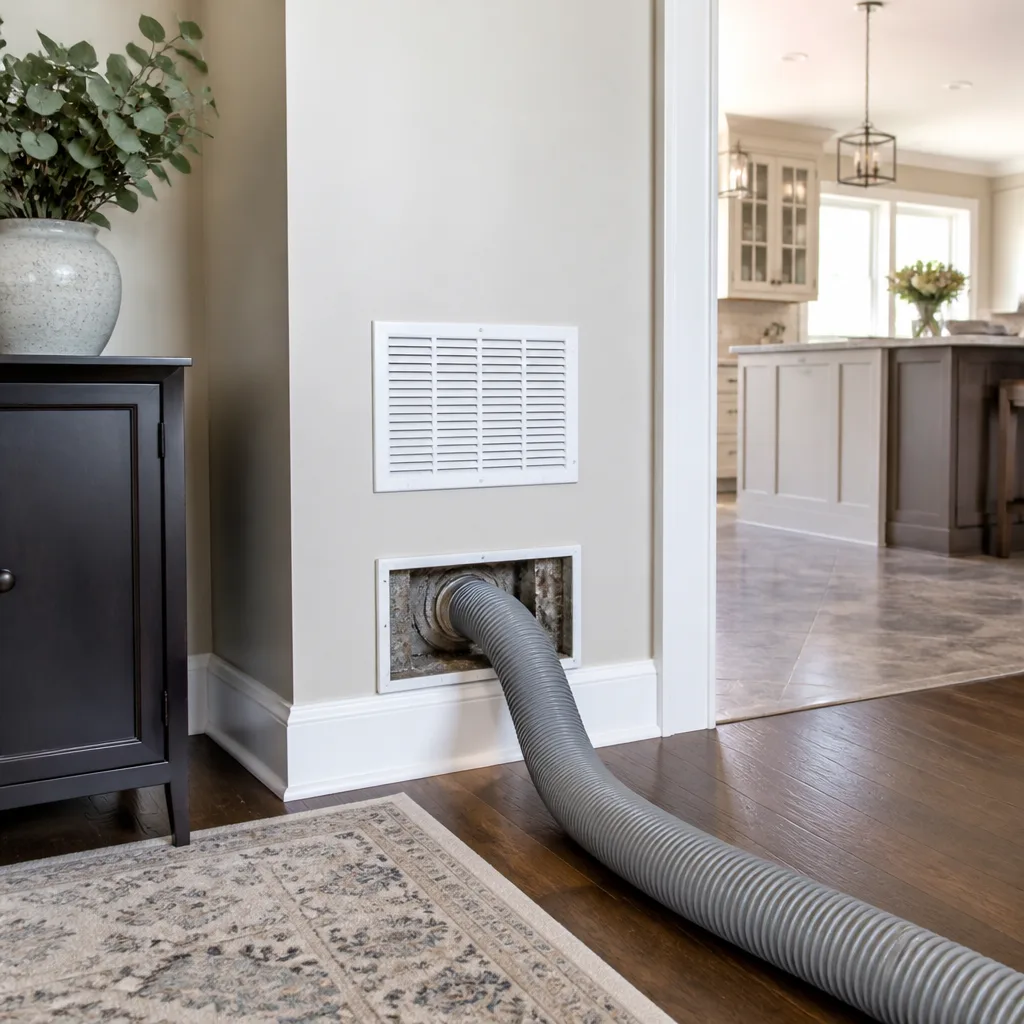 Whole-home duct cleaning
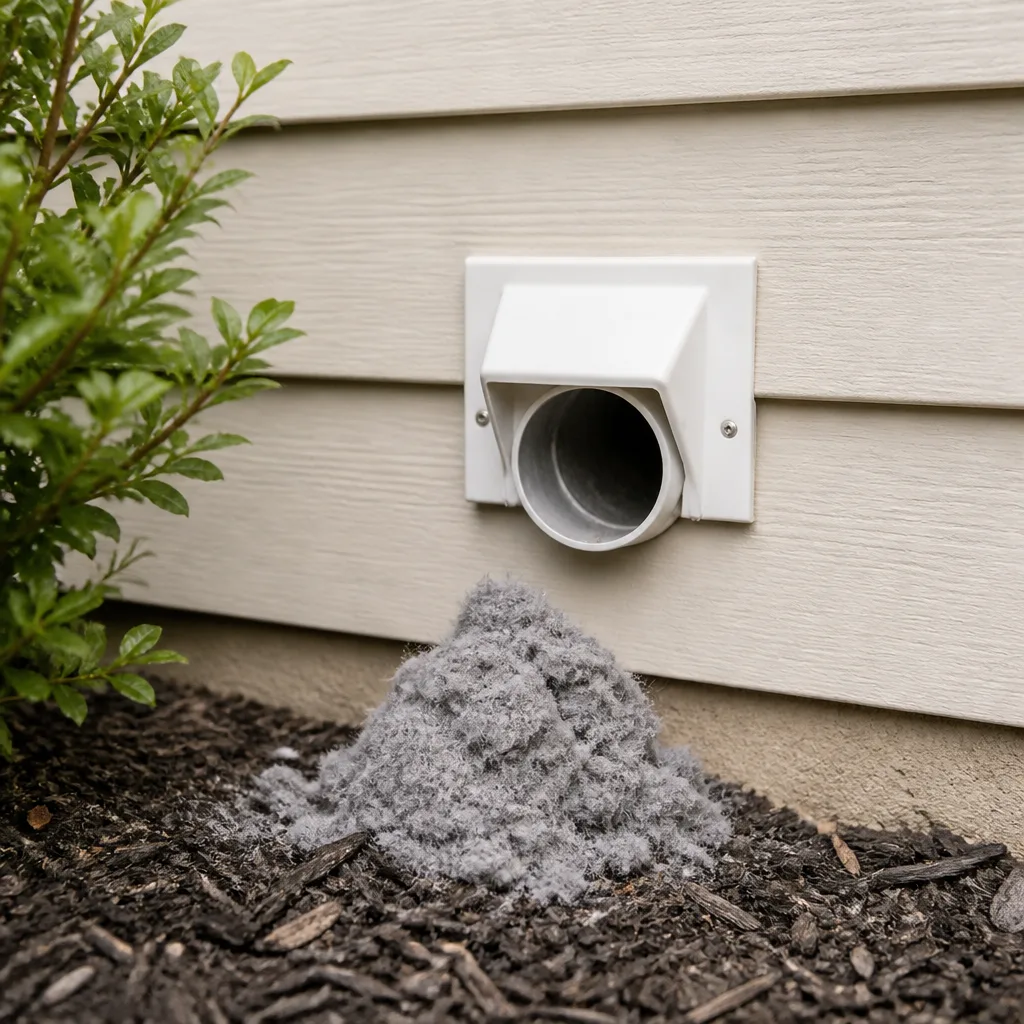 Dryer vent cleaning
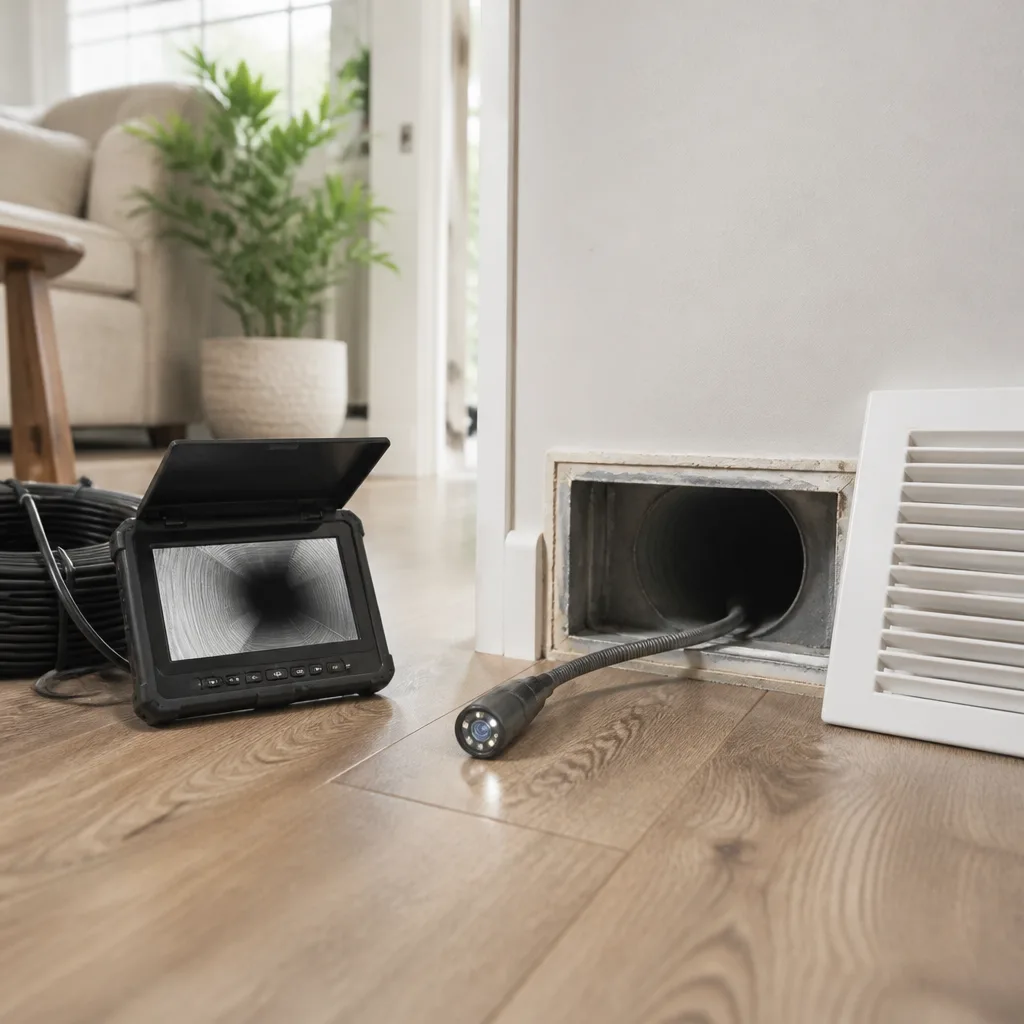 Camera inspection
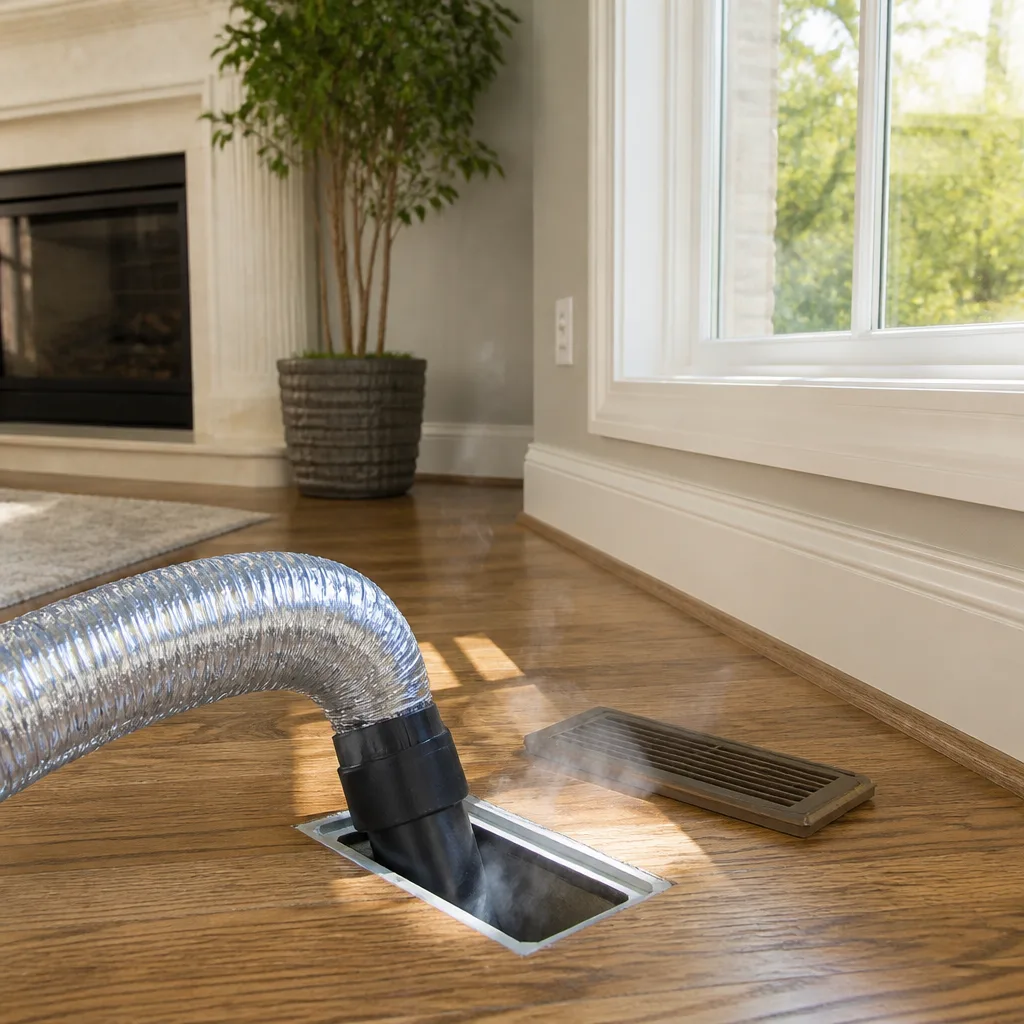 Sanitizing & deodorizing
Whole-system duct and dryer vent check with before-and-after photos - you see exactly what came out of your vents
That "$99 whole-house special" is a bait ad - the real number appears once they are in your hallway, or the "clean" is a shop-vac at the register. We photograph the inside of your ducts before and after instead.
Air Duct Cleaning Troubleshooting in Green Hills: Common Problems and How to Fix Them
If your HVAC tech replaced the filter, cleaned the coils, and recharged the refrigerant, but the musty smell came back in two weeks, the ductwork was never part of the conversation. That’s the problem. Most of what homeowners in Green Hills call “troubleshooting” happens at the air handler, when the real cause is usually sitting in the duct system behind the drywall or under the floor. Weak airflow, uneven room temperatures, and odors that keep returning after a tune-up are duct symptoms, not equipment symptoms. This guide walks you through how to read those symptoms accurately so you don’t waste money on the wrong fix, and so that when you do call someone, you know exactly what to ask for.
Quick Answer
Most air duct problems in Green Hills trace back to one of four root causes: duct leakage (seams, joints, and disconnected runs), duct contamination (buildup of dust, lint, and biological growth inside the liner), physical damage (collapsed or crushed flex duct), or airflow restriction at the return. Troubleshooting means identifying which of the four you’re dealing with before anyone starts cleaning. Cleaning a leaking system won’t fix the airflow. Sealing a contaminated system won’t fix the odor. Getting the diagnosis right first is what makes the repair stick.
Styles & brands we work with
- Whole-home duct cleaning
- Dryer vent cleaning
- Camera inspection
- Sanitizing & deodorizing
Table of Contents
- Is it the Duct System or the HVAC Unit? How to Tell
- Weak Airflow: Collapsed Duct vs. Blower or Filter Restriction
- Persistent Odors After Cleaning: What They Usually Mean
- How Green Hills Home Construction Shapes Which Duct Failures You’ll See
- Duct Leakage vs. Duct Contamination: Why Treating the Wrong One Fails
- When Repair or Sealing Has to Come Before Cleaning
- A Homeowner’s Inspection Walkthrough: What to Check and Where to Look
- The Dryer Vent Is Part of the Same Conversation
Is it the Duct System or the HVAC Unit? How to Tell
An HVAC unit moves air; the duct system delivers it. When something feels wrong, the two get blamed interchangeably, and that’s where diagnostic money goes to waste. The simplest way to separate them is to watch what happens between rooms. A failing blower or a clogged filter tends to weaken airflow everywhere at once. A duct problem tends to be uneven: one bedroom that never cools, a bathroom that’s always stuffy, a room over the garage that feels like a different house. That asymmetry is the tell.
Here’s how to narrow it down before you call anyone:
- Check the filter first. A loaded filter starves the whole system. If airflow improves everywhere after a filter change, you likely had restriction, not a duct failure.
- Walk the house with your hand at each supply register. Strong at some, weak at others points to the duct run serving the weak rooms. Uniformly weak points to the air handler side.
- Listen at the return grille. A whistling or strained sound can mean the return is undersized or partially blocked, which mimics a duct problem from the supply side.
- Look for pressure symptoms. Doors that are hard to close, or a register that pushes air only when a nearby door is open, suggest a pressure imbalance in the duct system.
- Check the air handler closet or attic connection. The joint where the plenum meets the first duct run is a common leak point, and it’s often visible.
If steps one and two point to uneven airflow and the filter was clean, you’re looking at a duct problem. That’s the moment to stop tuning the equipment and start reading the ducts. Homeowners in Green Hills deal with this constantly because the housing stock ranges from mid-century ranches with original ductwork to newer builds with tight, efficient envelopes that make every leak more noticeable. Our technicians have up to 12 years of experience reading exactly these patterns, and the diagnosis almost always starts with that same walkthrough.
Weak Airflow: Collapsed Duct vs. Blower or Filter Restriction
Weak airflow is the most misdiagnosed symptom in the trade. Homeowners replace blower motors when a flex run has collapsed. They buy higher-MERV filters when the return duct is crushed under a floor joist. The fix depends entirely on which side of the air handler the restriction lives on, and the physical inspection steps are different for each.
Start by eliminating the easy causes. A filter that’s been in place too long, an evaporator coil matted with dust, or a blower wheel caked with debris will all cut airflow evenly across the house. If every register is weak, suspect the air handler side first. That’s a job for your HVAC technician, not a duct cleaner.
If airflow is uneven, you’re likely dealing with one of these duct-side failures:
- Collapsed flex duct. Flexible duct that’s been kinked, crushed, or sagged between hangers loses most of its capacity. This is common in attics where the run sags under its own weight or gets stepped on during other work.
- Disconnected run. A joint that’s pulled apart dumps conditioned air into the attic, crawlspace, or wall cavity. You’ll feel weak airflow at the register and, often, a temperature difference at the grille itself.
- Crushed hard duct under a floor. Slab and raised-foundation homes sometimes have hard duct crossings that get compressed when flooring is replaced or furniture is loaded on top.
- Closed or obstructed damper. A balancing damper that was closed during a remodel and never reopened will starve a branch of the system.
- Undersized return. If the return can’t feed the blower, no amount of cleaning will fix the supply side.
To tell collapse from disconnection, follow the run. A collapsed section is visibly kinked or flattened along its length. A disconnected joint shows a gap at the connection point, often with visible dust streaking on the surrounding surface where air has been escaping. Both are physical problems, and both need repair before cleaning is worth doing. If you’re not comfortable crawling an attic, that’s the right time to bring in a specialist. Air Duct Cleaning Green Hills handles the full system, from inspection through air duct cleaning Green Hills, so a collapse found during the walkthrough gets fixed in the same visit.
Persistent Odors After Cleaning: What They Usually Mean
An odor that comes back within weeks of a cleaning is a signal, not a failure of the cleaning itself. Surface debris sitting on top of the duct liner can be knocked loose with a brush and vacuumed out. But biofilm, mold growth, and bacteria that have established inside the fibrous liner of flex duct don’t come off with a single mechanical pass. They live in the material, not on it. If the smell returned, the liner is colonized and surface cleaning was never going to resolve it.
The distinction matters because it changes the treatment:
- Surface debris is dust, lint, pet hair, and construction residue. This comes out with contact cleaning and HEPA extraction, and once it’s gone the odor usually is too.
- Biofilm in the liner is a living growth that has bonded to the inner surface. It needs mechanical agitation to break it loose, then an air-quality sanitizing step applied after cleaning, and in serious cases the affected flex runs get replaced.
- Odors from a dead animal or pest are localized and need removal plus sanitizing of the surrounding run, not a full-house treatment.
- Odors that are worse in one room usually point to that room’s duct run rather than the whole system.
In our experience working across Green Hills, the most common cause of an odor that survives a cleaning is that the original job was a single-pass brush job with no containment and no sanitizing. Contaminants get agitated into the air, some settle back into the duct, and the smell is back within a couple of weeks. A containment-first process changes the outcome because the dislodged material doesn’t get a chance to re-settle. We use Abatement Technologies negative-air containment during the job, which keeps debris out of your living space and prevents the cross-contamination that makes odors stubborn.
If your smell came back after a cleaning, ask what the previous company used for sanitizing and containment. The answer tells you more than the price did.
How Green Hills Home Construction Shapes Which Duct Failures You’ll See
Green Hills is a mix of construction eras, and the duct failure modes track the foundation type. Knowing which kind of house you’re in points you to where to look first.
Slab foundation homes are common in the older parts of Green Hills and throughout much of the mid-century stock. Ducts in slab homes typically run through the attic for the second floor and through a combination of chases and vertical runs for the first. The most common failure here is attic-side flex damage: sagging runs, crushed sections under blown insulation, and joint separation at the plenum. The slab itself isn’t usually the problem; the accessible duct above the ceiling is. Where a slab home has under-slab duct, that’s a different conversation entirely and usually needs a camera inspection before anyone commits to a fix.
Crawlspace homes show up on the sloped lots and older sections of Green Hills. Here the ductwork runs under the floor, and the failure modes shift:
- Insulation loss on duct runs leads to condensation and liner deterioration, which feeds biological growth.
- Vapor and humidity in the crawlspace attack flex duct from the outside in, degrading the jacket and eventually the liner.
- Pest intrusion is more common under the floor, and a chewed jacket is both a leak and a contamination source.
- Disconnected runs after foundation work are frequent, because any pier-and-beam leveling can shift the ductwork beneath.
If your home has been through foundation work of any kind, that’s a strong reason to inspect the crawlspace duct runs even if nothing seems wrong yet. Connection points that were fine before the work can open up, and the airflow loss might only show in one or two rooms. In newer Green Hills builds with tight envelopes, leakage is more noticeable because the house doesn’t have as much slack to absorb it; a small leak that would be invisible in a drafty ranch shows up as a temperature problem in a tight modern home. HVAC cleaning across the full system is the most efficient way to walk both the air handler side and the duct side in one pass, especially when the foundation type tells you where to look.
Duct Leakage vs. Duct Contamination: Why Treating the Wrong One Fails
Leakage and contamination are two separate problems that produce overlapping symptoms, and they get confused constantly. Leakage is air escaping where it shouldn’t. Contamination is what’s growing or accumulating inside the duct. Fixing one without addressing the other is why homeowners end up paying twice.
Here’s how to tell them apart:
- Leakage symptoms: rooms that never reach temperature, high energy bills for the amount of comfort you’re getting, dust streaking around joints and grilles, condensation on duct surfaces in the attic.
- Contamination symptoms: odor, visible dust plumes from registers on startup, allergy symptoms that worsen at home, dark staining inside the grille or on the liner, visible growth at the duct interior after a camera look.
- Both at once: a leak pulls contaminated air from an attic or crawlspace into the system, so the two feed each other. This is the most common pattern we see in Green Hills.
The reason the sequence matters is physics. If you clean a leaking system, the cleaned surfaces get re-contaminated by outside air pulled in through the leak within weeks. If you seal a contaminated system, you trap the growth in place and the odor gets worse because there’s no longer any air exchange diluting it. The correct order for a system with both problems is repair and seal first, then clean and sanitize, so the cleaned surfaces stay clean. That sequence is also why a company that only cleans ducts and can’t seal them will leave you with a symptom that never fully resolves. Handling the full duct system under one roof is the practical answer. Air Duct Cleaning Green Hills performs cleaning, sanitizing, repair, and sealing as one coordinated job, which is the only way to guarantee the order is right.
When Repair or Sealing Has to Come Before Cleaning
A percentage of duct cleaning jobs shouldn’t be cleaning jobs at first. They should be repair jobs that end with cleaning. If your troubleshooting has turned up any of the following, cleaning alone won’t hold and the repair has to come first:
- Disconnected or separated runs. Cleaning a disconnected duct just moves debris into the wall cavity or attic. It gets reconnected, then cleaned.
- Collapsed flex duct. Replace the failed section, verify the airflow is restored, then clean the rest of the system.
- Failed duct jacket or liner. If the outer jacket is torn or the inner liner is deteriorated, the run needs replacing. Cleaning accelerates deterioration on a failing liner.
- Leaking joints you can feel. Any joint where you can feel air escaping with your hand at the connection is a leak that will undo the cleaning.
- Peeling or degraded duct tape. Duct tape fails over time. Joints still held with original tape from decades ago are almost always leaking, and re-sealing them is a prerequisite.
- Visible growth on duct interior surfaces. Sanitizing happens after mechanical cleaning, but any run where growth has penetrated the liner needs replacement, not just sanitizing.
- Post-foundation-work disturbed connections. Any crawlspace or attic duct that shifted during foundation work needs to be verified and re-sealed before cleaning.
This is where equipment choice ties directly to the diagnosis. Repair and sealing done properly needs contact cleaning and HEPA extraction after the repair so that the newly sealed system is clean from the first minute. We use Rotobrush contact cleaning and Nikro HEPA-filtered extraction for exactly this sequence, and it’s the same equipment category used in certified remediation work. The point isn’t the brand name; it’s that the seal-then-clean order only works if the cleaning step doesn’t re-introduce contamination, and that requires proper extraction.
If your duct runs through a crawlspace and you’ve had any foundation work done in Green Hills, this section applies to you more than most. Green Hills has a lot of pier-and-beam and crawlspace construction, and leveling work is common. Runs that looked perfect before the work often don’t after.
A Homeowner’s Inspection Walkthrough: What to Check and Where to Look
You don’t need to climb into the attic to troubleshoot your ducts. A methodical walkthrough of the house will tell you more than an hour of guessing, and it will give whoever you call a much better starting point. Here’s the sequence we suggest:
- Note the symptom pattern. Whole-house or room-specific? Constant or only on heat/cool cycles? Worse in the morning or after the system has been running a while? Write it down.
- Change the filter and re-check before assuming anything. A dirty filter mimics most duct symptoms and costs nothing to rule out.
- Test airflow at every register. Hold a piece of tissue or your hand at each one. Note which are strong, weak, or asymmetric compared to the room next door.
- Look at the grilles. Dark streaking around the perimeter of a supply or return suggests air is escaping past the boot and pulling in dust from the wall or ceiling cavity.
- Smell the return. Fresh-air smell at the return that’s worse when the system starts suggests contamination near the air handler. A room-specific smell points to that room’s run.
- Check the air handler closet or attic connection if it’s accessible. Look at the plenum connection, the first 3 feet of each main run, and any visible joint for tape failures, tears, or crushing.
- Look for condensation or staining. On duct surfaces in the attic or crawlspace, moisture is a strong indicator of insulation failure and a lead-in to liner growth.
- Ask for a camera inspection when the run isn’t visible. Anyone assessing your ducts should offer a look inside the runs when the exterior looks fine but the symptoms persist.
This walkthrough will not fix the problem, but it will classify it. Most homeowners who follow these steps arrive at one of four conclusions: leak, contamination, physical damage, or restriction at the air handler. That classification is what the estimate should be built on, and it’s what keeps a low-priced cleaning from becoming the wrong job. When we estimate a job in Green Hills, we walk the same sequence on-site before quoting, and the written estimate sets the final price so there’s no surprise when the technician finishes.
The Dryer Vent Is Part of the Same Conversation
If you’re already thinking about your duct system, the dryer vent belongs in the same inspection. It’s not connected to the HVAC ducts, but it’s the same category of problem with a worse consequence. Lint buildup in a dryer vent is the leading cause of dryer-related fires, and the failure modes are the same ones you just read about: restriction, disconnection, and liner failure. A dryer that takes two cycles to dry a load, a vent flap that doesn’t open fully, or visible lint around the vent cap all point to the same thing.
Most duct cleaners skip dryer vent work or treat it as an afterthought. We clean and inspect it as a dedicated service because the diagnosis is straightforward and the benefit is immediate: shorter dry times, less lint in the laundry room, and one less hazard. If you’re going to walk the house once, walk to the dryer vent too. Green Hills has plenty of homes where the dryer vent runs up through the wall or roof, and the longer the run, the more critical the inspection. You can see how we handle dryer vent cleaning on its own page, but the short version is: any home with a dryer vent longer than a few feet benefits from a professional look, and the signs of a failing vent show up long before a fire.
Common Mistakes to Avoid
- Assuming the HVAC tech already checked the ducts. HVAC technicians tune the equipment. Unless they specifically looked inside the duct system, the ducts remain unexamined, and most of what you’re troubleshooting lives there.
- Replacing a blower motor before checking the airflow pattern. Uniformly weak airflow points to the air handler; room-specific weak airflow points to the duct run. Replacing the wrong one wastes money and leaves the actual problem intact.
- Buying a higher-MERV filter to “trap more dust.” A restrictive filter on an undersized return starves the system and can mimic duct collapse. Match the filter to the return capacity, not to the dust you’re seeing.
- Hiring a cleaning when the diagnosis is a leak or a collapse. Cleaning a system that needs repair is the most common wasted job in Green Hills duct work. Sequence matters, and repair-first has to be the rule.
- Accepting a single-pass brush cleaning for a biological odor. Biofilm lives in the liner, not on it, and it needs mechanical agitation plus sanitizing plus containment to resolve. A quick pass with a brush pushes the problem around.
- Ignoring the crawlspace after foundation work. If the house has been leveled, the duct connections under it almost certainly moved. Check the crawlspace runs before assuming the ducts are fine.
- Skipping the dryer vent because “it’s not really an HVAC duct.” It’s the same category of failure and a much bigger safety risk. If you’re already walking the duct system, look at the dryer vent too.
See the difference
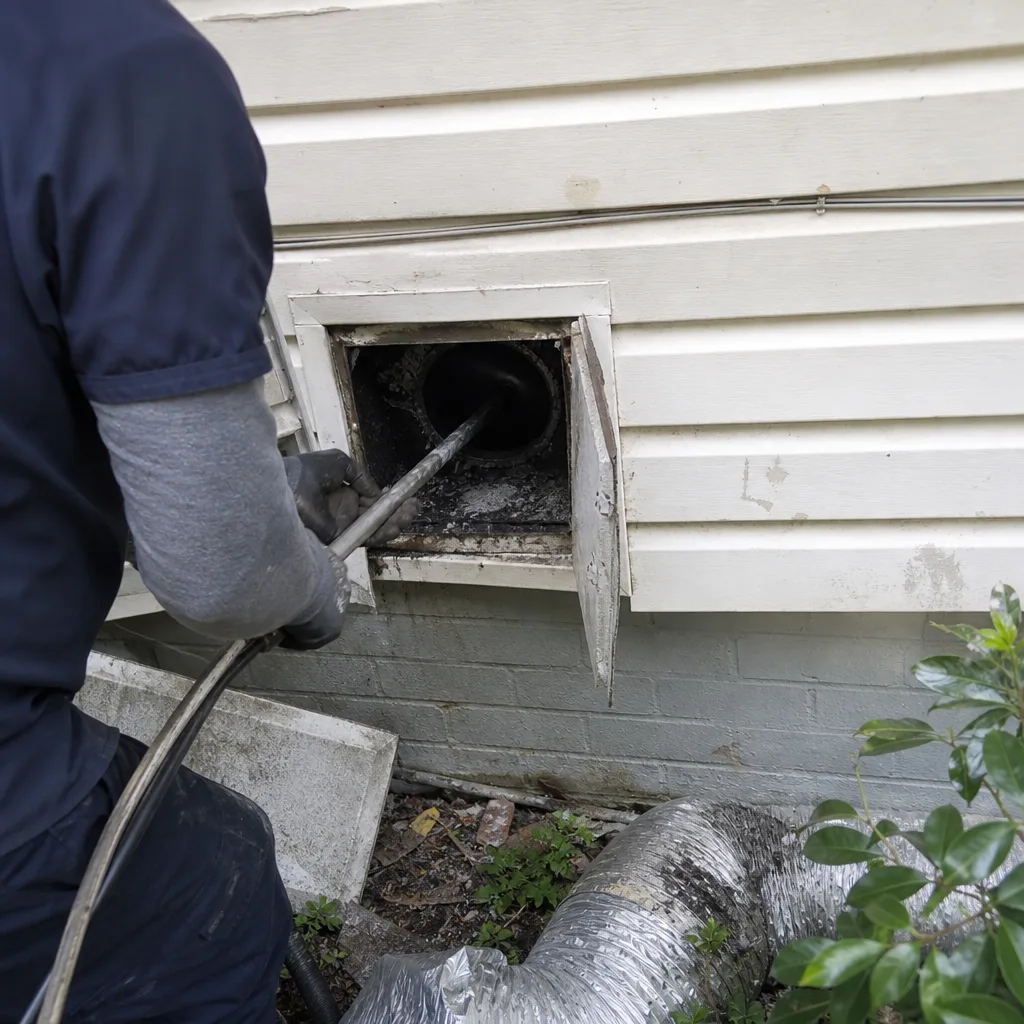 Before
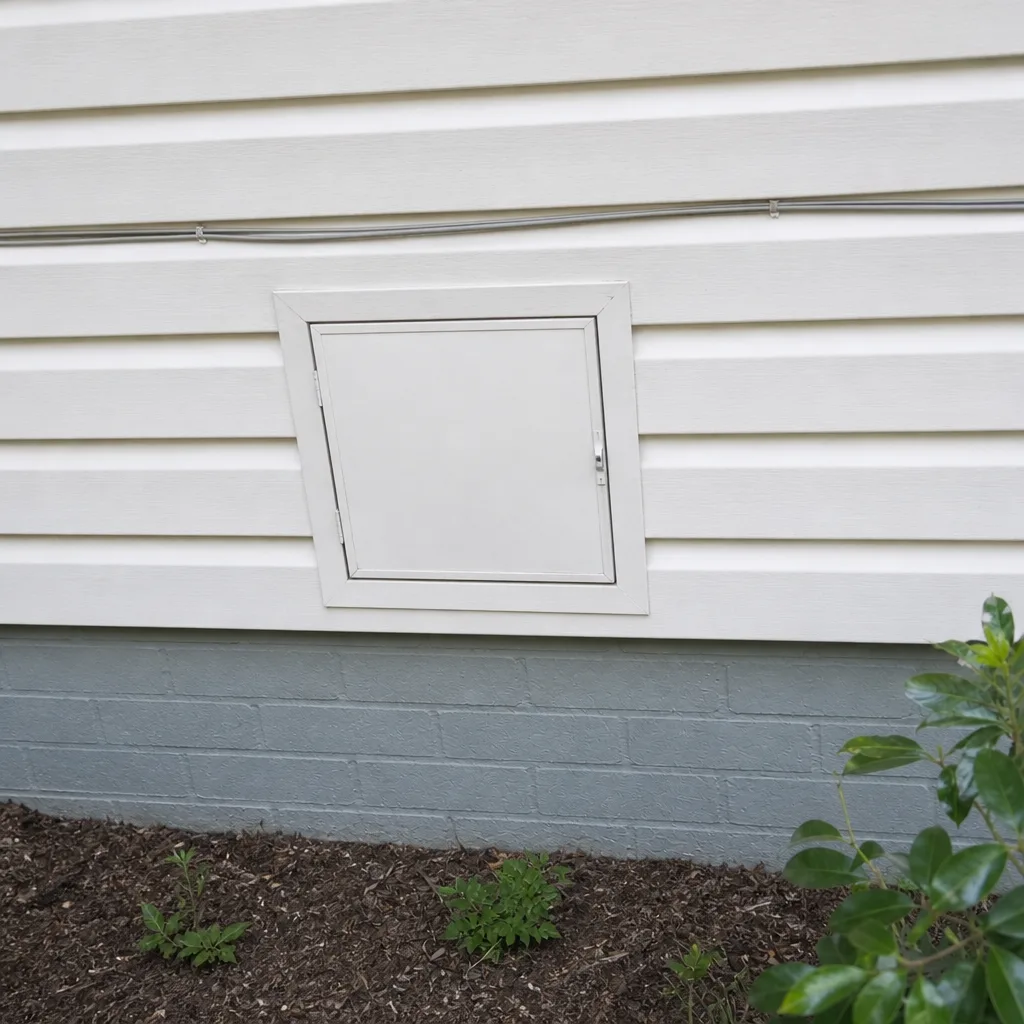 After
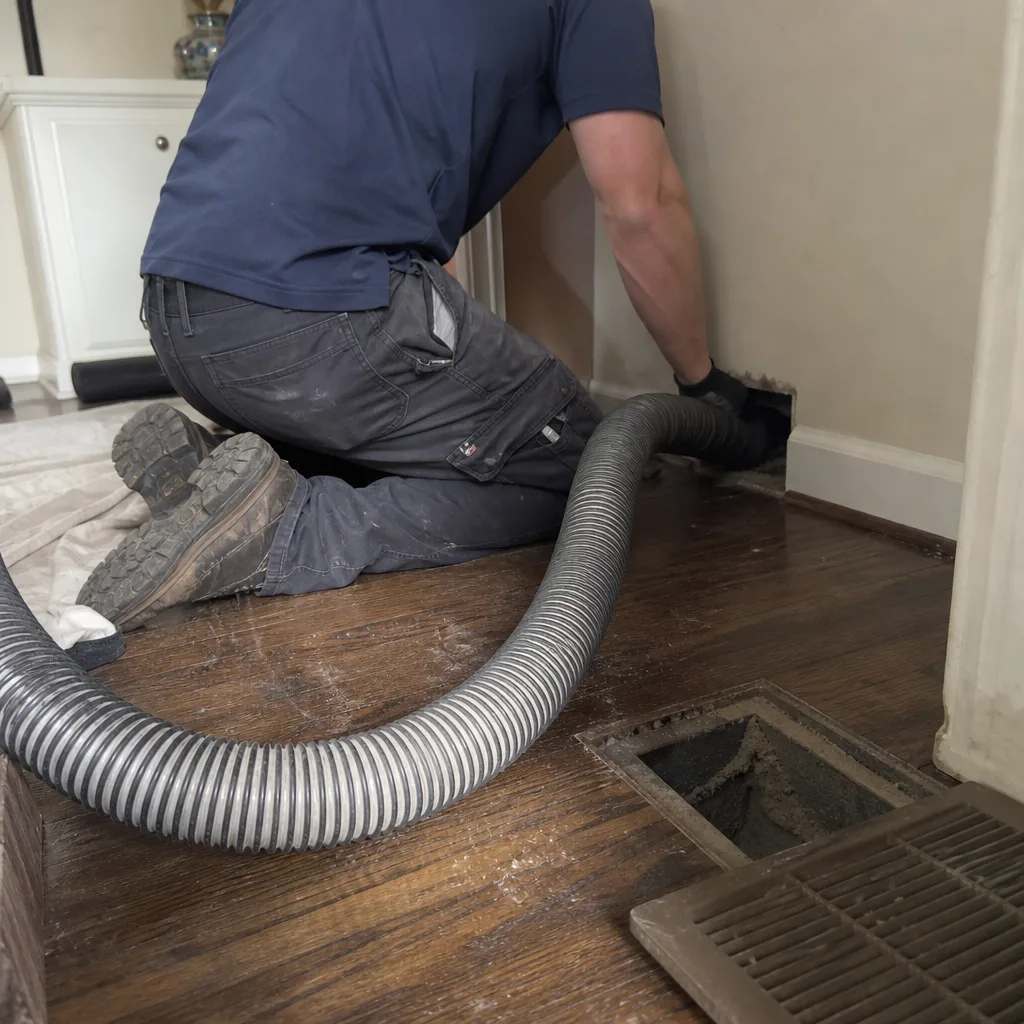 Before
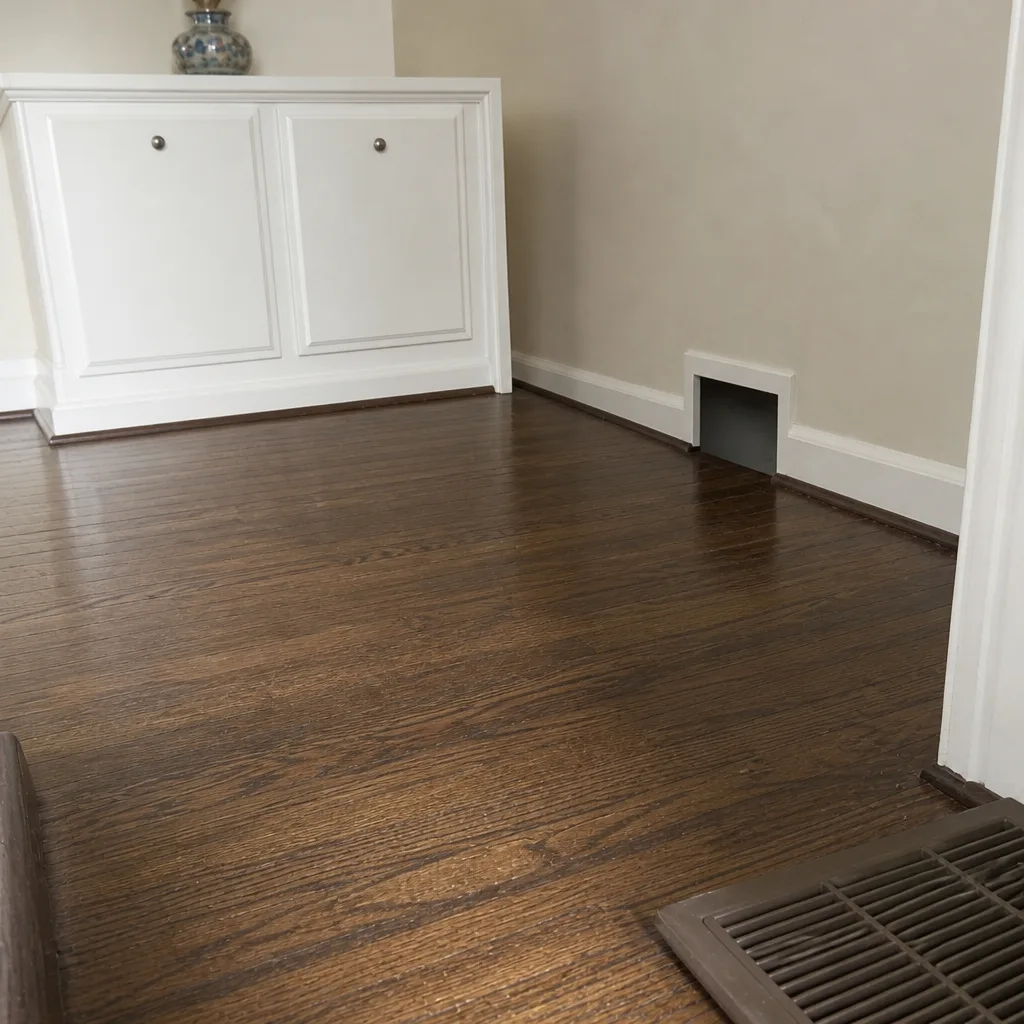 After
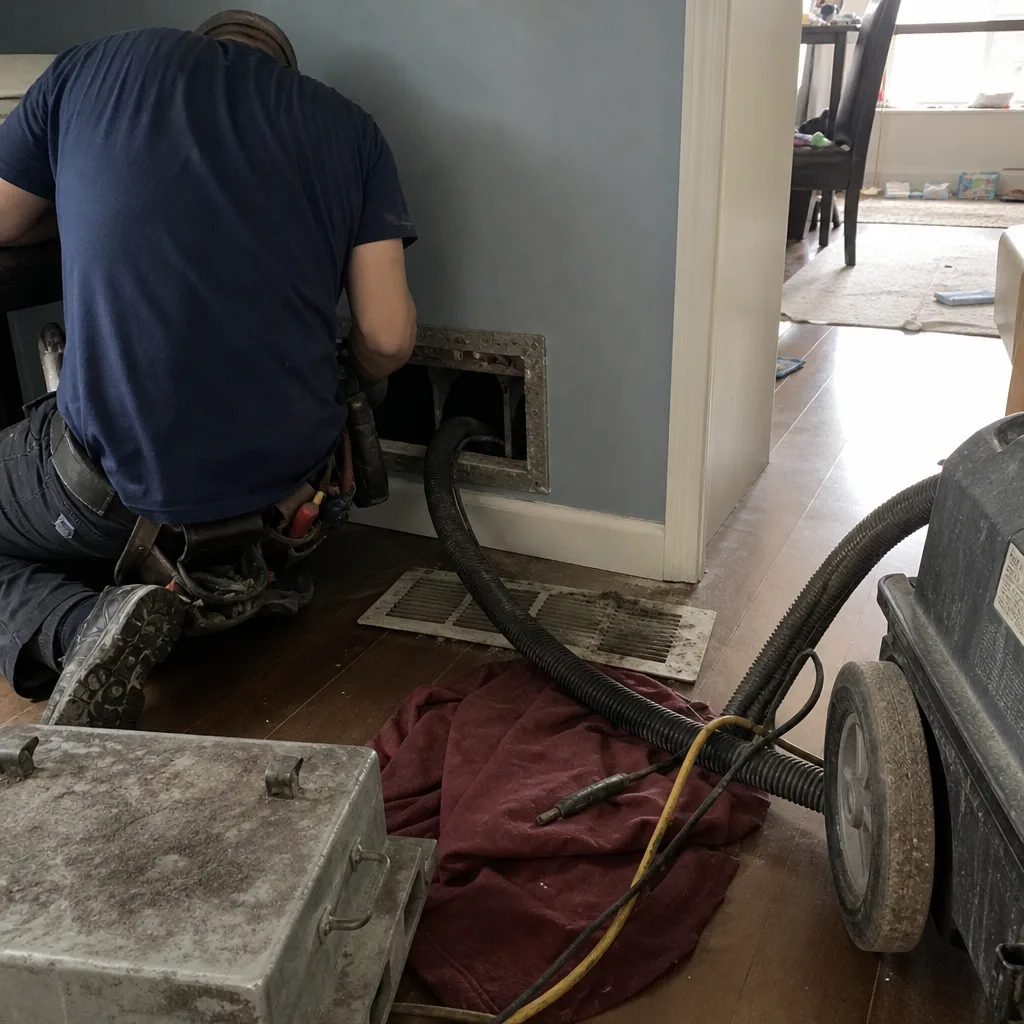 Before
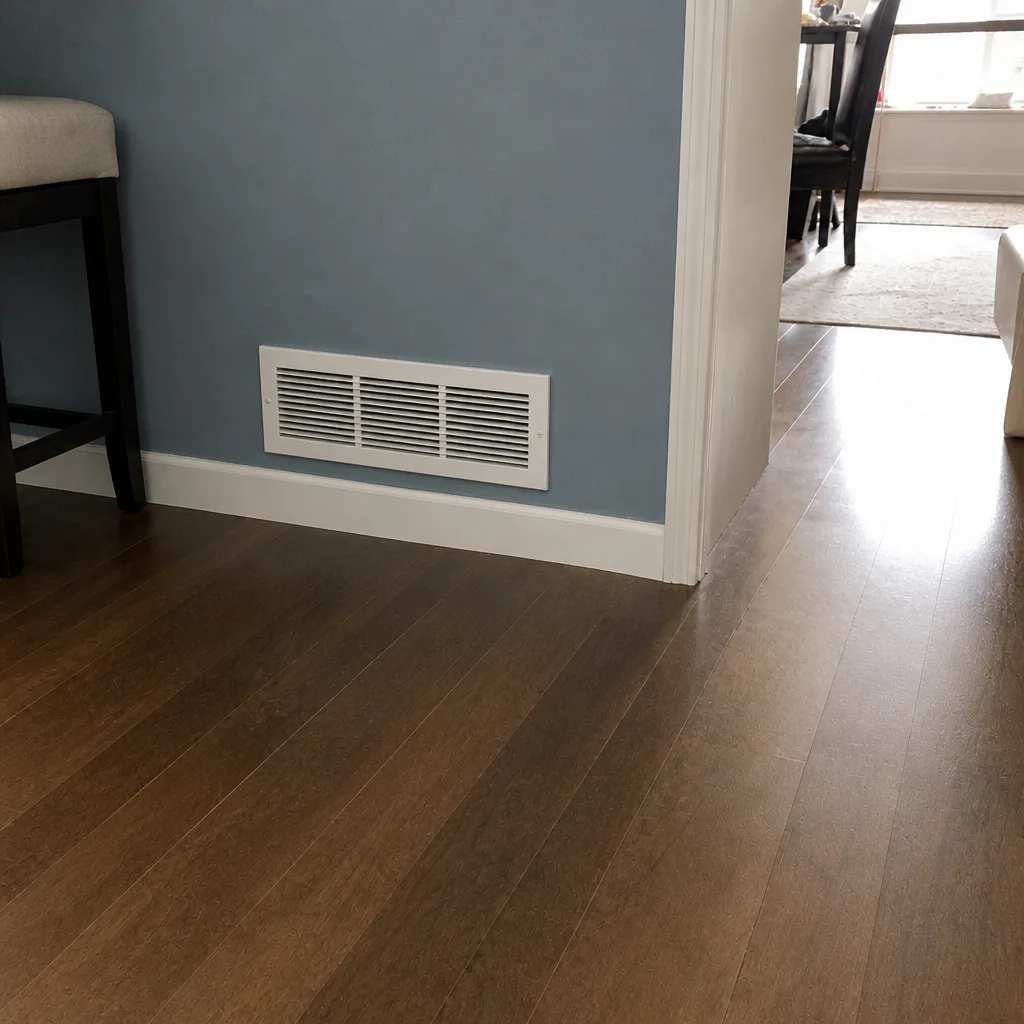 After
When to Call a Professional
Some duct problems are within reach of a careful homeowner with a flashlight and a plan. Others need a professional with proper extraction and containment equipment. Call a professional if any of the following is true:
- The odor came back within a month of a prior cleaning.
- Airflow is uneven across rooms and the filter checks out.
- You’ve had foundation work and the duct runs go through a crawlspace.
- You see streaking around grilles, visible dust plumes on startup, or condensation on duct surfaces.
- You’re planning a renovation and want the ducts protected and cleaned afterward.
- The dryer vent run is long, or the dryer takes more than one cycle.
- You’ve had pest intrusion and need the surrounding duct inspected and sanitized.
Air Duct Cleaning Green Hills offers free estimates in Green Hills. Call (855) 658-4338. We answer 24/7, with fast dispatch from 7am to 7pm, Sunday through Friday. The estimate is per job, written out before any work starts, and it sets the final price.
Frequently Asked Questions
Biofilm or mold has established inside the duct liner and wasn’t fully removed by the original cleaning. A single mechanical pass agitates surface debris but doesn’t address growth bonded to the liner, so the smell returns within weeks. Resolving it requires mechanical agitation, sanitizing applied after cleaning, and containment during the job so dislodged contaminants don’t re-settle. Call (855) 658-4338 for an exact quote; estimates are free.
Weak airflow in some rooms but not others is almost always a duct problem, while weak airflow everywhere points to the air handler, filter, or return. A quick test with your hand at each register usually separates the two within a few minutes. If it’s room-specific, inspect that room’s duct run for collapses, disconnects, or closed dampers before you replace any equipment.
Crawlspace homes in Green Hills most commonly show insulation loss, liner deterioration from humidity, pest intrusion, and disconnected runs after foundation work. Start by inspecting the duct runs under the floor for torn jackets, dark staining, or visible gaps at joints. If the house has been leveled or supported at any point, inspect every connection before assuming the ducts are intact.
Sealing comes first, then cleaning. Cleaning a leaking system re-contaminates the cleaned surfaces within weeks as outside air is drawn through the leak. Sealing a contaminated system traps growth in place and makes the odor worse. The correct order is repair and seal, then clean and sanitize, so the cleaned system stays clean.
Pricing is set per job by the written estimate, based on the size of the system, the number of runs, the condition found during inspection, and whether repair or sealing is needed before cleaning. That’s the honest way to quote it, because a flat number offered over the phone can’t account for a collapsed run or a detached joint. An estimate on-site is what produces an accurate figure. Call (855) 658-4338 for an exact quote; estimates are free.
Lower quotes usually reflect a narrower scope: a single-pass brush cleaning with no containment, no sanitizing, and no repair capability. That’s why the symptom often returns. A quote that includes containment, proper HEPA extraction, sanitizing where needed, and the ability to repair and seal before cleaning costs more upfront because the job is complete. Ask what’s included before comparing two numbers on the same page.
Ask for before-and-after photos of your own ducts, not stock images, and ask what equipment was used. Containment equipment should be visible and running during the job, and the extraction unit should be HEPA-filtered. If the company can’t show you the inside of the duct before and after, that’s a sign the scope was narrower than promised.
Yes, they’re separate systems. The dryer vent carries lint at high heat and is one of the more common fire hazards in a home, and it doesn’t get touched by an HVAC duct cleaning. If your dryer takes longer than one cycle, or the vent flap doesn’t open fully, it’s worth a look. The air duct cleaning service and dryer vent work are both available under one call.
The Bottom Line
Most duct problems in Green Hills come down to a diagnosis, not a cleaning. Those symptoms you’ve been troubleshooting were pointing you to the duct system the whole time, and the four root causes (leakage, contamination, physical damage, restriction) each need a different treatment. Repair and sealing come before cleaning, not after. Biofilm needs sanitizing after mechanical cleaning, not a single brush pass. Crawlspace homes need the connections checked after any foundation work. Get the classification right, and the fix holds. Get it wrong, and you’re paying for the wrong job twice. Air Duct Cleaning Green Hills works the full system, so the diagnosis and the fix happen under one call. Call (855) 658-4338 for a free estimate. We answer 24/7, with fast dispatch from 7am to 7pm, Sunday through Friday.
Written by the team at Air Duct Cleaning Green Hills.