
Last updated November 24, 2026
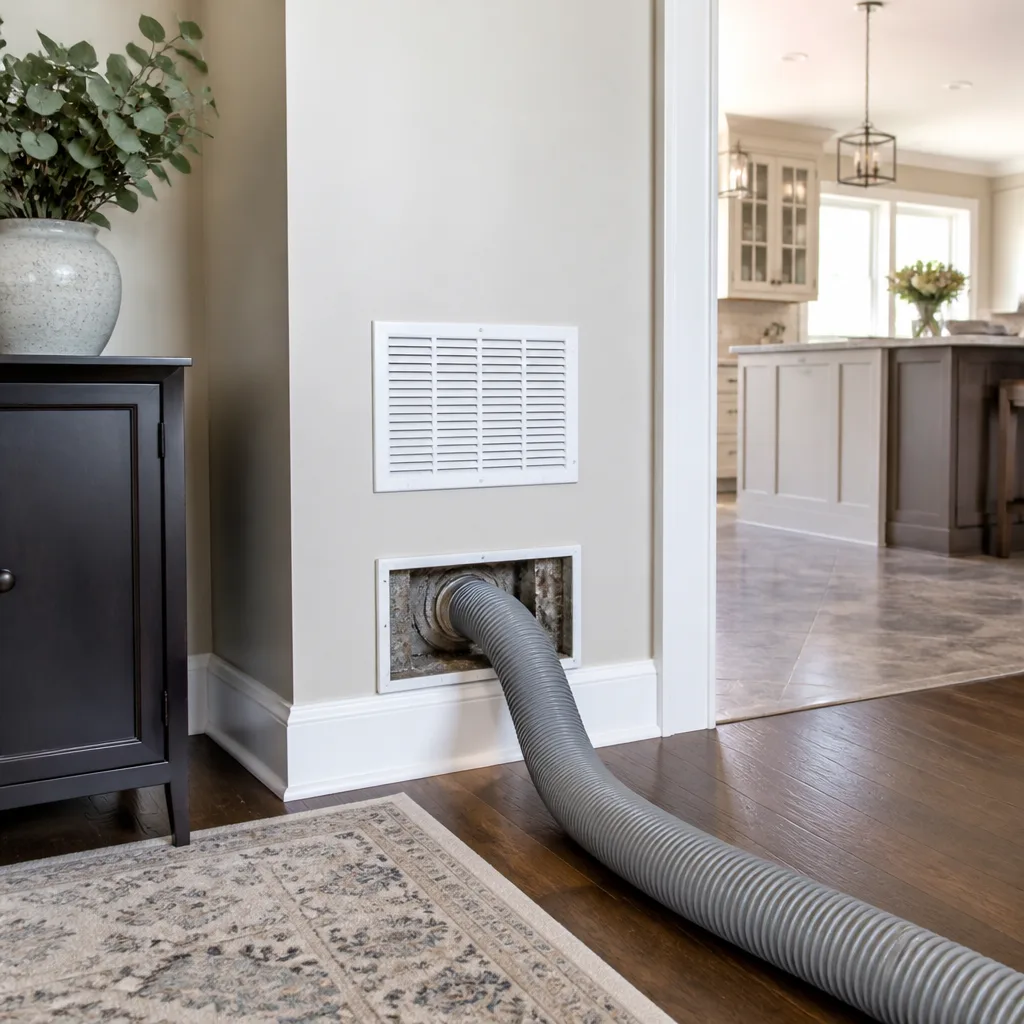 Whole-home duct cleaning
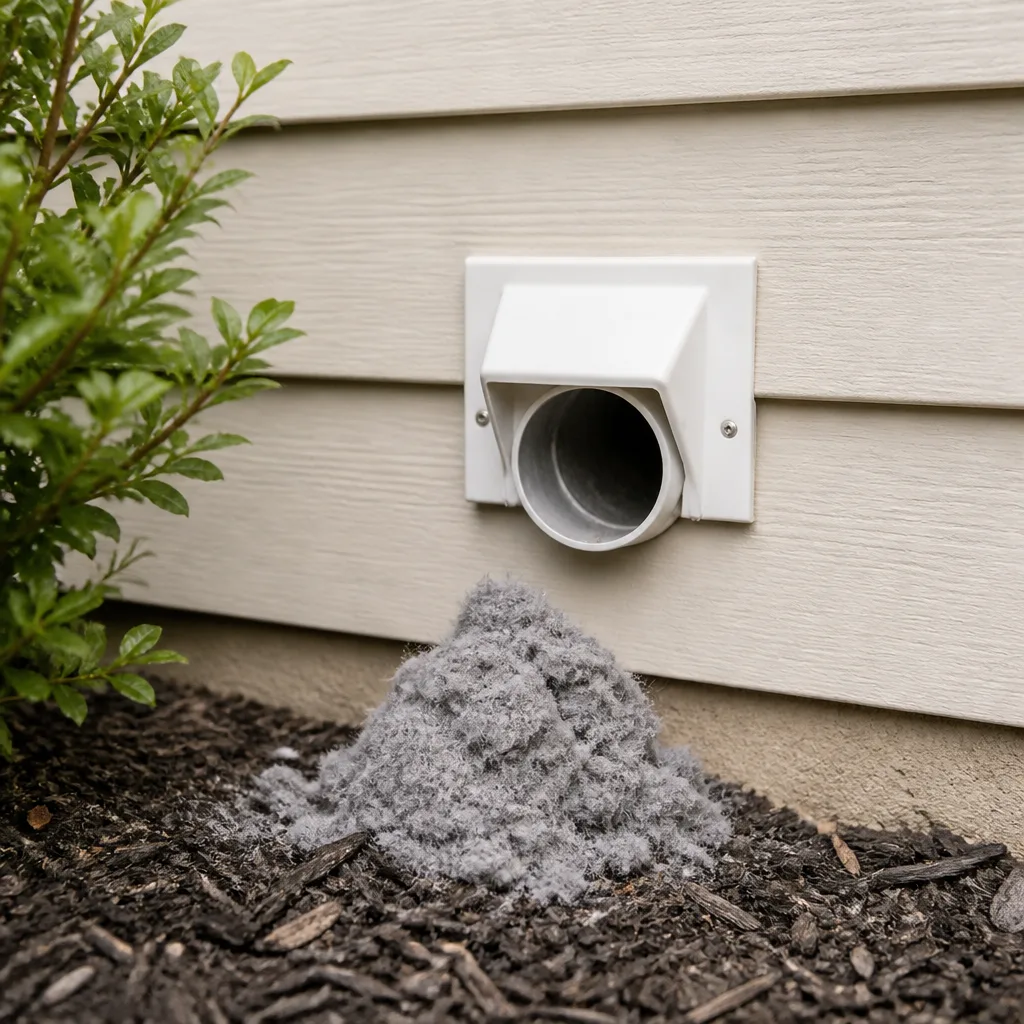 Dryer vent cleaning
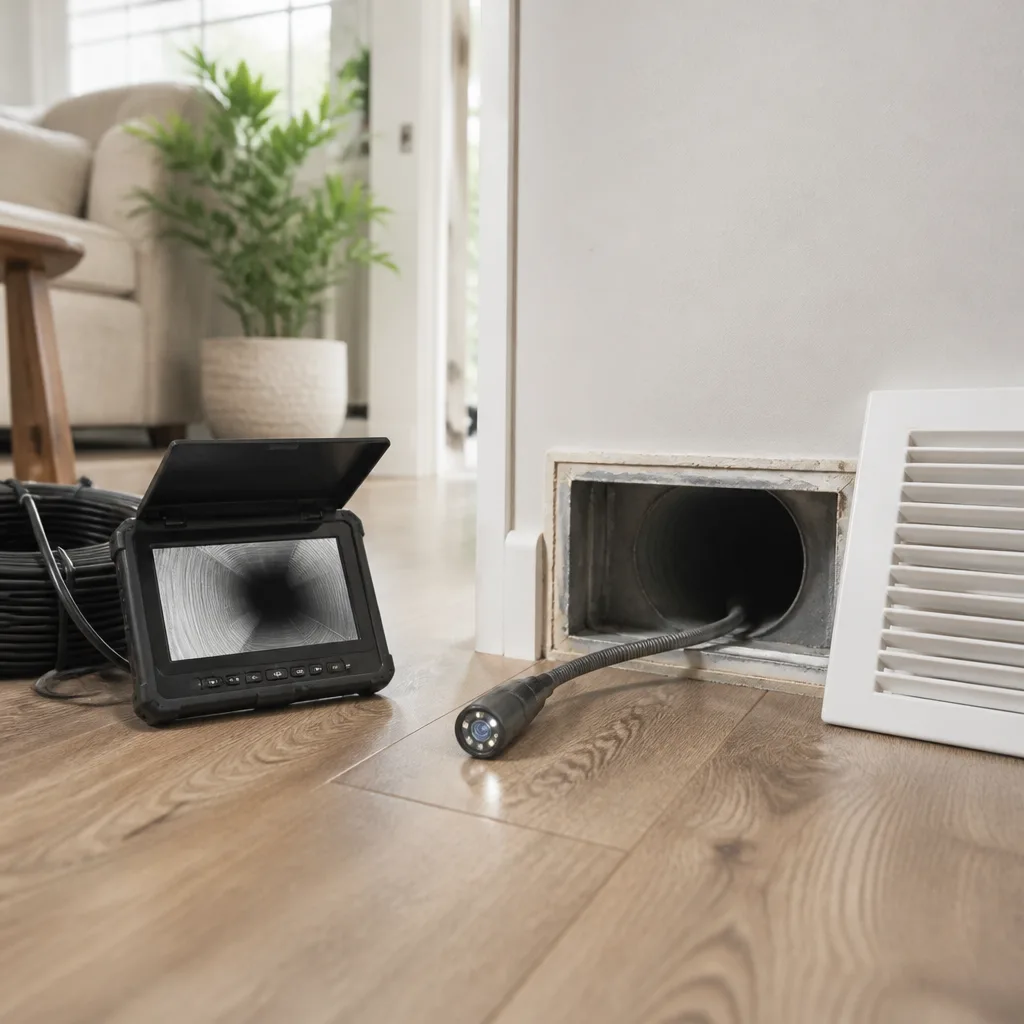 Camera inspection
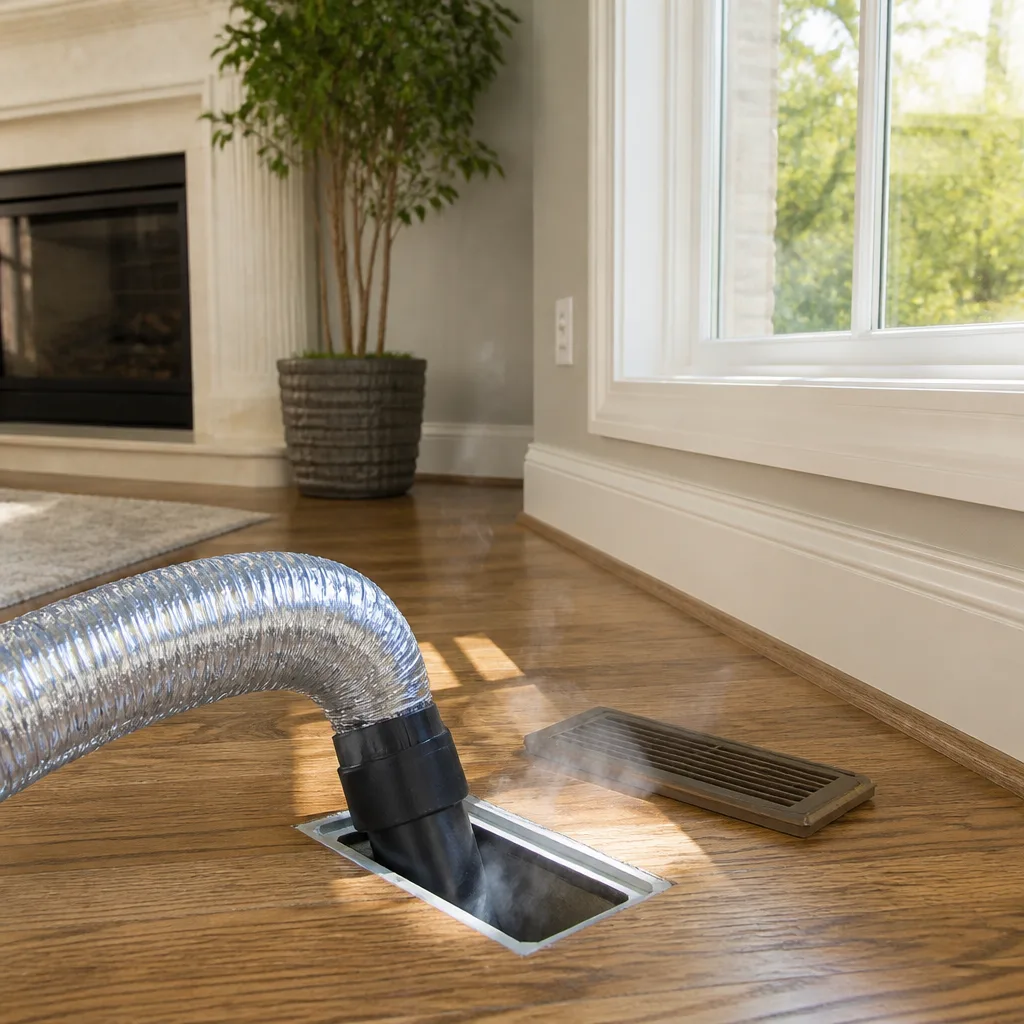 Sanitizing & deodorizing
Whole-system duct and dryer vent check with before-and-after photos - you see exactly what came out of your vents
That "$99 whole-house special" is a bait ad - the real number appears once they are in your hallway, or the "clean" is a shop-vac at the register. We photograph the inside of your ducts before and after instead.
Air Duct Cleaning Maintenance Schedule: What to Do and When
The EPA’s often-quoted “clean your ducts every 3 to 5 years” line gets passed around like a warranty card, but it was never written as a universal prescription. It’s a floor, not a plan. We’ve pulled heavy debris from ducts in homes that were cleaned less than two years earlier, and we’ve opened systems that were still in decent shape after twice that long. The difference wasn’t luck; it was the load those ducts were carrying: pets, people, renovation dust, duct material, and how humid the house gets through a Tennessee summer. This guide lays out a variable-interval schedule you can build yourself, and it’s written from Green Hills, where those variables run particular to the climate.
Quick Answer
Most Green Hills homes land on a 2- to 5-year duct cleaning cycle, not a fixed calendar. Households with shedding pets, allergy sufferers, recent renovation work, or fiberboard or flex duct tend toward the 2- to 3-year end; low-occupancy homes with sealed metal ductwork and steady filtration can stretch toward 5 years. The right interval comes from watching your registers and knowing your load factors, not from a number on a manufacturer’s pamphlet. Build the schedule yourself using the framework below, and revisit it any time your household changes.
Styles & brands we work with
- Whole-home duct cleaning
- Dryer vent cleaning
- Camera inspection
- Sanitizing & deodorizing
Table of Contents
- What actually drives recontamination rate
- Building your variable-interval model
- Filters between cleanings: MERV and your system
- Green Hills timing: the two strategic cleaning windows
- How to self-assess with a register inspection
- Off-schedule triggers that override the calendar
- Duct material matters: flex, sheet metal, fiberboard
- Common mistakes to avoid
- When to call a professional
What Actually Drives Recontamination Rate
Ducts don’t get dirty on a timer. They collect what the return air carries, which means recontamination speed is a function of the load on your system. Understanding those load factors is what separates a useful schedule from a guess.
The biggest variables we’ve seen in Green Hills homes:
- Pets. A double-coated dog or a cat shedding daily moves a remarkable amount of hair and dander into the return air. Homes with two or more indoor pets typically need to halve their cleaning interval compared to a pet-free home of the same size.
- Occupant count and activity. More people means more skin cells, more laundry, more cooking particulate, and more foot traffic kicking up dust. A family of five pushes the system harder than two retired occupants in the same square footage.
- Allergy and asthma history. If someone in the house reacts to dust, pollen, or pet dander, the acceptable contamination threshold drops. A system that’s fine for a healthy adult can be worth cleaning sooner for a sensitive occupant.
- Renovation activity. Drywall dust, sawdust, insulation fibers, and sanding residue are heavy and fine. They settle in ducts for years after the project ends.
- Duct material. Flex duct has ribbed interior walls that catch debris. Fiberboard duct is porous by nature and absorbs contaminants. Sheet metal is the smoothest and the slowest to foul.
- Filtration and sealing quality. A well-sealed system with the right filter grade fouls much more slowly than a leaky, unsealed one pulling attic and crawlspace air into the return.
Stack three or four of these in one Green Hills house – say, two shedding dogs, a recent kitchen remodel, and fiberboard branch runs – and you’re looking at a system that recontaminates in under 18 months. Ignore all of them and five years may be genuinely appropriate.
Building Your Variable-Interval Model
A variable-interval model is simpler than it sounds. You start with a baseline interval and adjust it downward for every load factor your household carries. The result is a starting number you refine with the register inspection described further down.
Here’s how to build it:
- Start with a baseline of 5 years. This assumes a sealed sheet-metal system, no pets, no allergies, no recent renovation, and steady filtration. Few Green Hills homes actually qualify, but it’s the top of the range.
- Subtract 18 months for any indoor pet with a heavy coat. Deduct a further year if there are two or more.
- Subtract 12 months if anyone in the household has allergies, asthma, or a diagnosed respiratory sensitivity.
- Subtract 24 months if there’s been significant renovation in the past three years. Drywall and cabinet work counts; painting alone usually doesn’t.
- Subtract 12 months if the duct system is flex or fiberboard, or includes long runs of either. Add back 6 months if it’s predominantly sheet metal and sealed.
- Subtract 6 months for a household of four or more occupants.
- Floor it at 2 years. Below that, you’re probably looking at a source problem – a return leak, a pest issue, or a filtration gap – rather than ordinary fouling, and the fix is sealing and filtration, not more frequent cleaning.
Run the math for a typical Green Hills house – one dog, one allergy sufferer, flex branch runs – and you land around the 2-year mark. Run it for a two-person house with a sealed metal trunk and no pets and you’re at 4 to 5 years. That’s the whole point of the model: the number should look different for every house.
Filters Between Cleanings: MERV and Your System
Most of what happens between professional cleanings depends on your filter. The common advice to “buy the best filter you can afford” is wrong for a lot of systems, and it’s the single most common mistake we see in Green Hills homes. Filter grade is a trade-off between capture efficiency and airflow resistance, and every HVAC system has a limit on how much resistance it can tolerate before static pressure climbs and the blower starts working harder than it should.
Here’s how to think about MERV ratings in practice:
- MERV 8: The everyday baseline. Captures most dust, pollen, and larger particulate at low resistance. Fine for most Green Hills homes with no specific air quality concerns.
- MERV 11: A step up for pet owners and mild allergy sufferers. Still within the static pressure tolerance of most residential systems, though it’s worth checking airflow after a change.
- MERV 13: High capture of fine particulate. This is where static pressure becomes a real concern. Some systems handle it comfortably; others lose airflow noticeably. It usually works best in a media cabinet designed for it, not a 1-inch slot filter.
- MERV 16+ and HEPA-grade: Not appropriate for most standard residential return grilles. The resistance is too high without a dedicated cabinet.
The practical rule: match the filter to your system’s pressure tolerance, not to the highest number on the shelf. If you’ve installed a MERV 13 filter and notice weaker airflow at registers or the blower laboring, step back down. Also check the filter slot size: a 1-inch filter changes faster than a 4-inch media cabinet filter, and running a dirty filter accelerates duct fouling no matter what grade it is. If you’re unsure what your system was designed for, a whole-home filtration setup from a brand like Honeywell or Aprilaire can be sized to the blower, and we can advise on which approach fits.
Green Hills Timing: The Two Strategic Cleaning Windows
Calendar placement matters as much as interval length. Green Hills sits in a humid subtropical climate with a long pollen season and a damp, muggy summer, and those two conditions create two clear strategic windows for a professional cleaning.
Late spring, after pollen season. Middle Tennessee’s tree pollen peaks in spring and grass pollen follows into early summer. A whole-season of pollen load rides in every time the system runs, and much of it settles in the return and branch ducts. Cleaning in late May or early June, once the bulk of pollen has passed, clears out that accumulation before the heavy cooling season starts pulling it back through the house.
Late summer, after the humidity peak. The dewpoint climbs through July and August in Green Hills, and that humidity does two things: it makes duct interiors more hospitable to mold and mildew growth, and it stresses the HVAC system, which runs almost continuously. A cleaning after the worst of the summer humidity clears out any biological growth that got a foothold, before the system transitions to heating mode.
If you’re going to pick one, late spring usually wins for homes with allergies. If you’re going to pick two and you’re on a tight interval anyway, splitting the cleanings across the two windows keeps the system at its cleanest through the seasons that matter most. Fall is a reasonable third option, but winter cleaning doesn’t help much: the debris sits there until spring anyway.
How to Self-Assess with a Register Inspection
You don’t need a borescope to judge your recontamination rate. A simple visual inspection of a few supply and return registers tells you most of what you need to know, and it’s the most useful thing you can do between professional cleanings.
Here’s a repeatable inspection routine:
- Pick three supply registers and one return grille in rooms you use most. The return matters most because it collects the heaviest load.
- Remove the grille and shine a flashlight into the duct opening. Look at the duct wall about a foot in, not just the visible grille surface.
- Note what you see. A light, even film of dust is normal. Visible clumps of dust, matted lint, dark patches, or a texture you can see from arm’s length is not.
- Wipe a small section with a white cloth. A faint gray transfer is fine. A thick, dark, or greasy smear indicates meaningful accumulation.
- Look for moisture or discoloration near the register boot. Dark staining or a musty smell is a signal to clean sooner and investigate the source.
- Repeat the inspection roughly every six months and note the change. If you’re seeing heavy accumulation at the 18-month mark, your interval should be two years, not five.
What this does is replace a guess with a measurement. Two homes in the same Green Hills block can be on a 2-year cycle and a 5-year cycle respectively, and the register inspection is how each household knows which one it is.
Off-Schedule Triggers That Override the Calendar
Some events jump the queue regardless of where you sit in your interval. These are the situations where waiting out the calendar is the wrong call, and knowing them keeps a good schedule from becoming a rigid one.
- Renovation dust. Drywall, sanding, and cabinet work send fine particulate into the return air even with plastic sheeting up. A cleaning within a month or two of the project finishing is worth it.
- Rodent evidence. Droppings, gnaw marks, or nesting material near ductwork means the system needs cleaning and likely repair. Rodent activity often means a breach in the duct envelope that also needs sealing.
- Water intrusion near ductwork. A roof leak, plumbing drip, or crawlspace moisture event that wets duct insulation creates a mold risk in the system. Clean and inspect promptly; don’t wait for the register inspection cycle.
- A new pet. Adding a shedding dog or cat to the household roughly doubles the load. Rebuild the interval from scratch rather than continuing on the old schedule.
- After a major system repair or replacement. Debris, insulation fragments, or metal shavings from the work often end up in the ducts.
- Musty smells or allergy flare-ups that appear suddenly. A sudden change usually points to a contamination event rather than ordinary fouling.
Any of these is a legitimate reason to book an air duct cleaning off-cycle. If two or more stack up in the same year, treat that as a signal to review the whole system including the return side and any sealing gaps.
Duct Material Matters: Flex, Sheet Metal, Fiberboard
Duct material is the variable homeowners think about least and it affects fouling rate as much as anything else on this list. Each material fouling at its own pace, and each also has different cleaning considerations.
Sheet metal is the smoothest and slowest to foul. Debris tends to stay on the surface rather than embed, and it cleans thoroughly with mechanical agitation and HEPA extraction. Homes with sealed sheet-metal systems generally get the longest interval of the three materials.
Flex duct has a corrugated interior lining that traps lint, hair, and dust in its ridges. It’s common in Green Hills homes for branch runs, and it fouls noticeably faster than the metal trunk. It also needs gentler cleaning methods so the liner isn’t damaged in the process.
Fiberboard duct is porous by design. Contaminants absorb into the surface rather than sitting on it, and the material can be difficult to clean without surface damage. Homes with fiberboard runs need a shorter interval and are the clearest candidates for sealing work to reduce future intrusion.
If your system is mixed – metal trunk with flex branches, which is common – the interval should follow the worst material, not the best. That usually means spacing cleanings closer together than a full-metal home of the same household would need.
See the difference
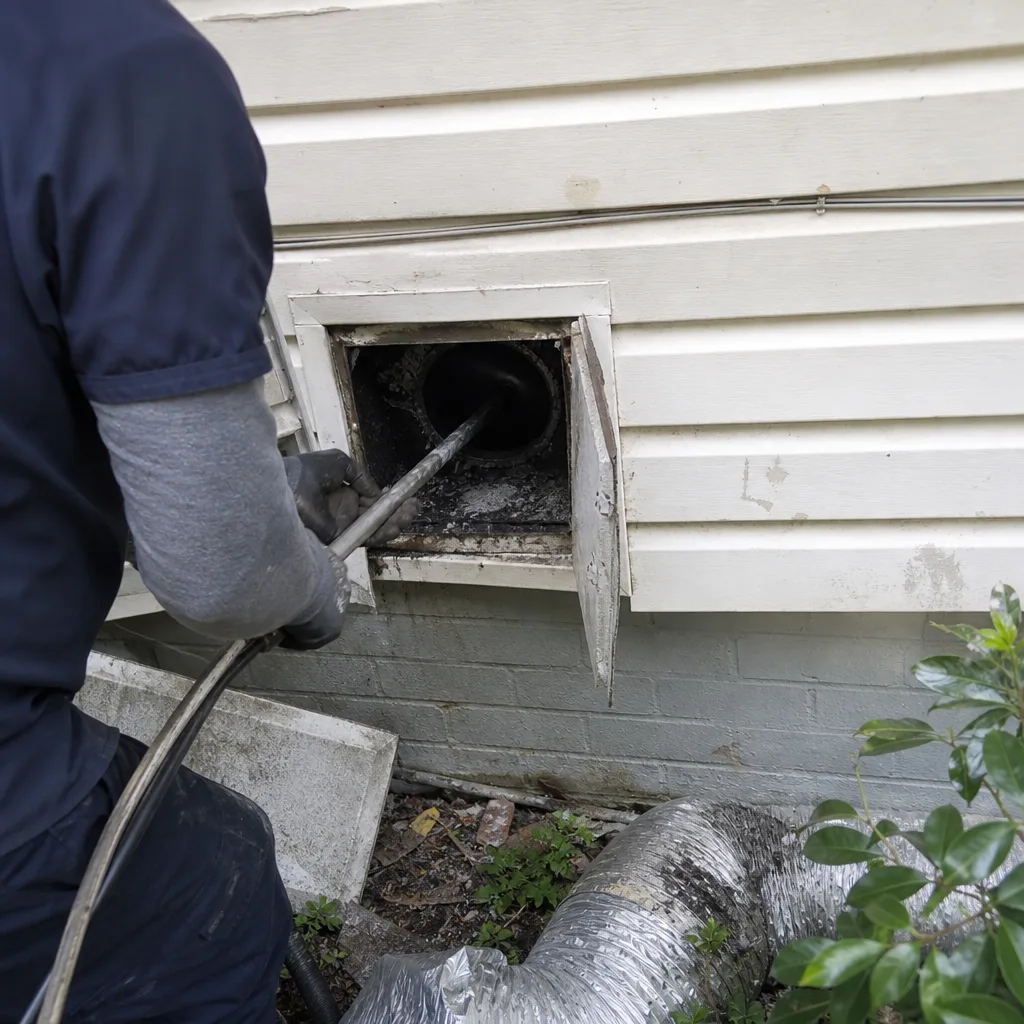 Before
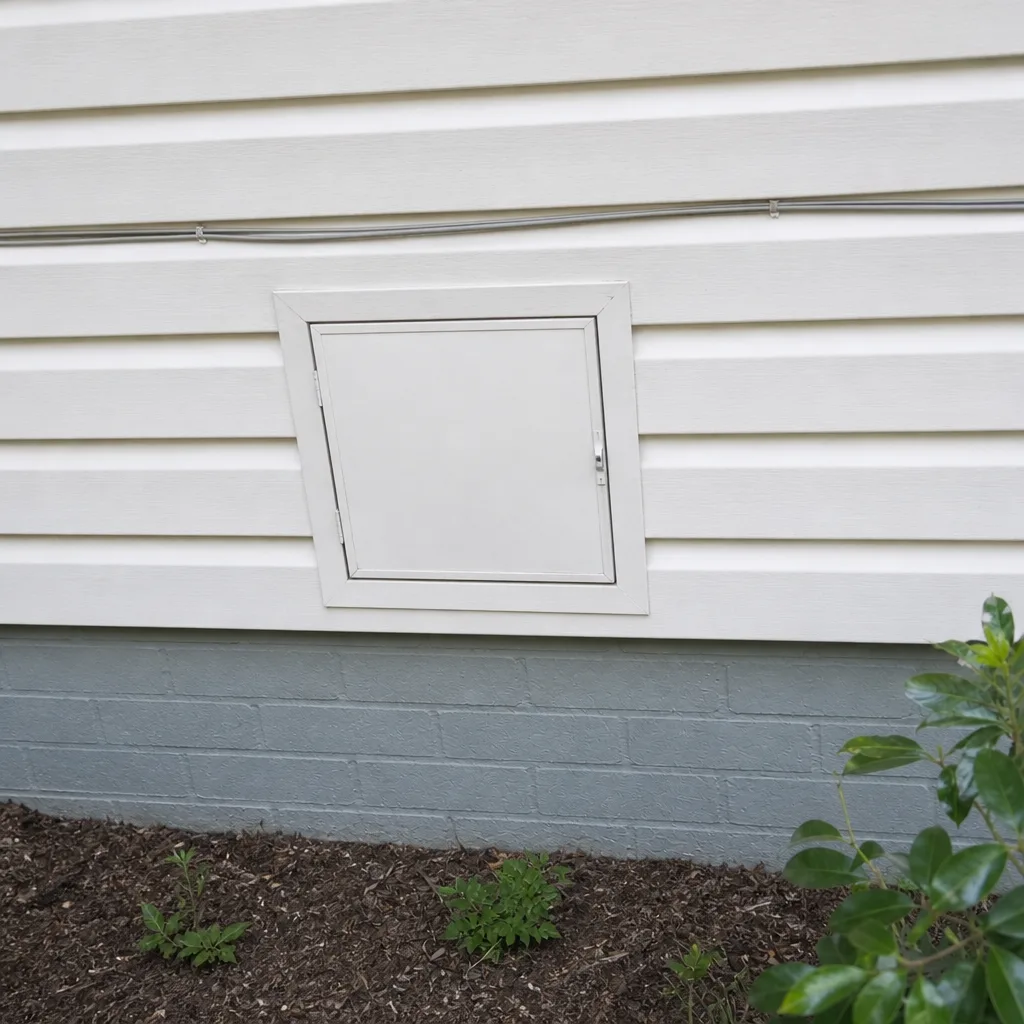 After
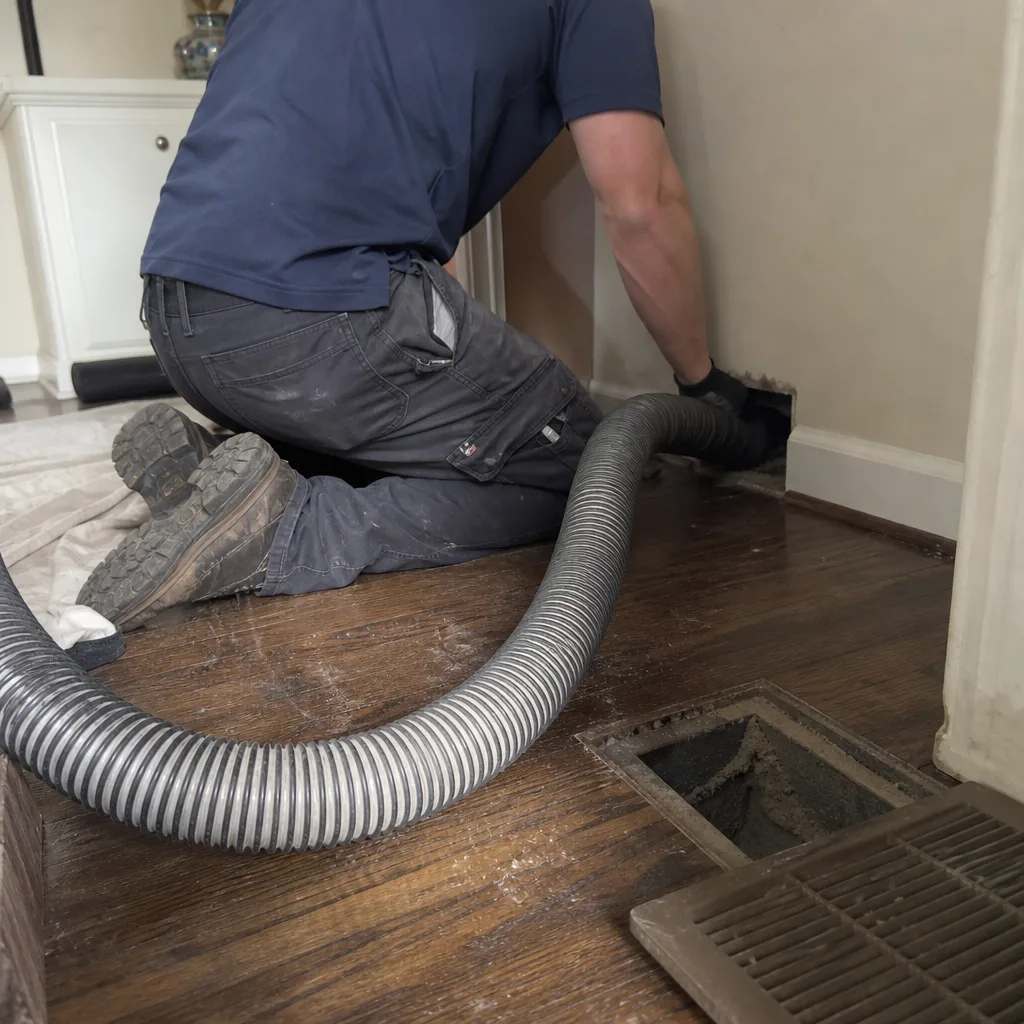 Before
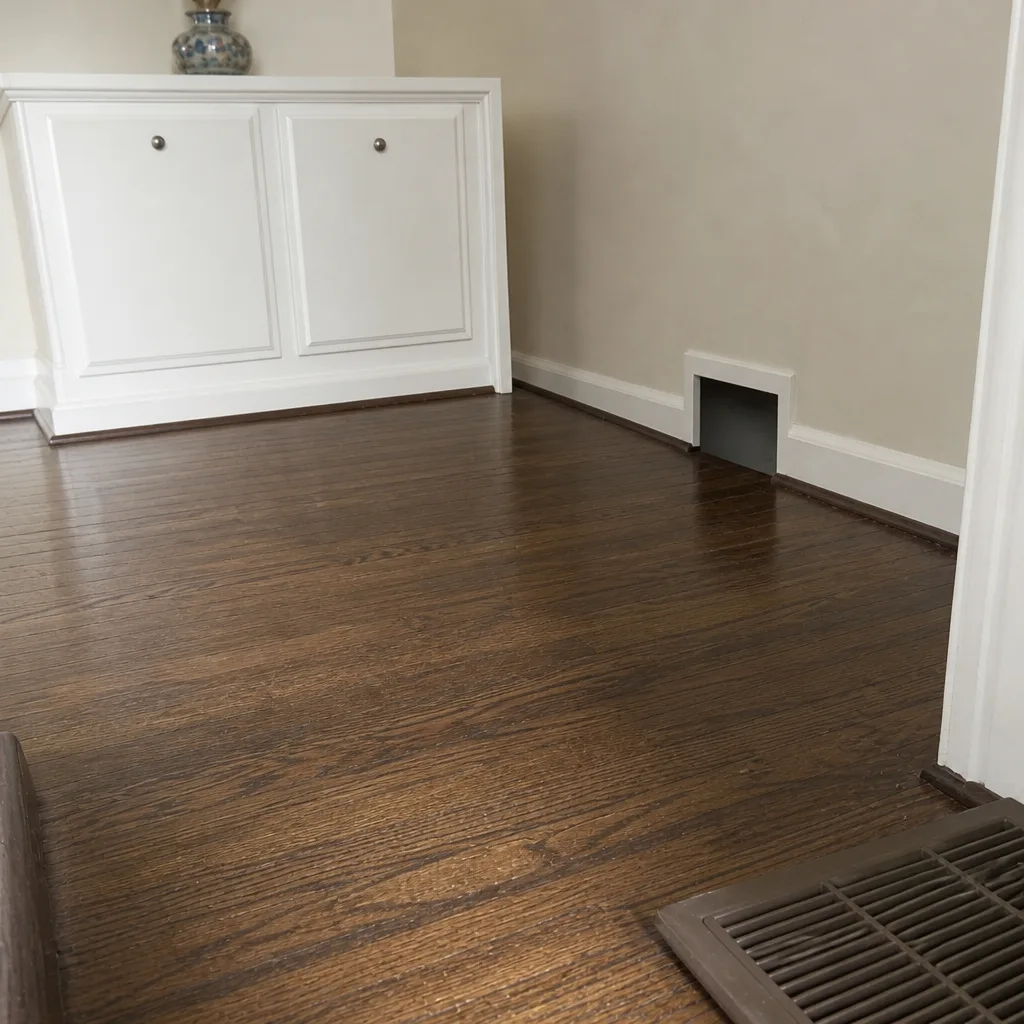 After
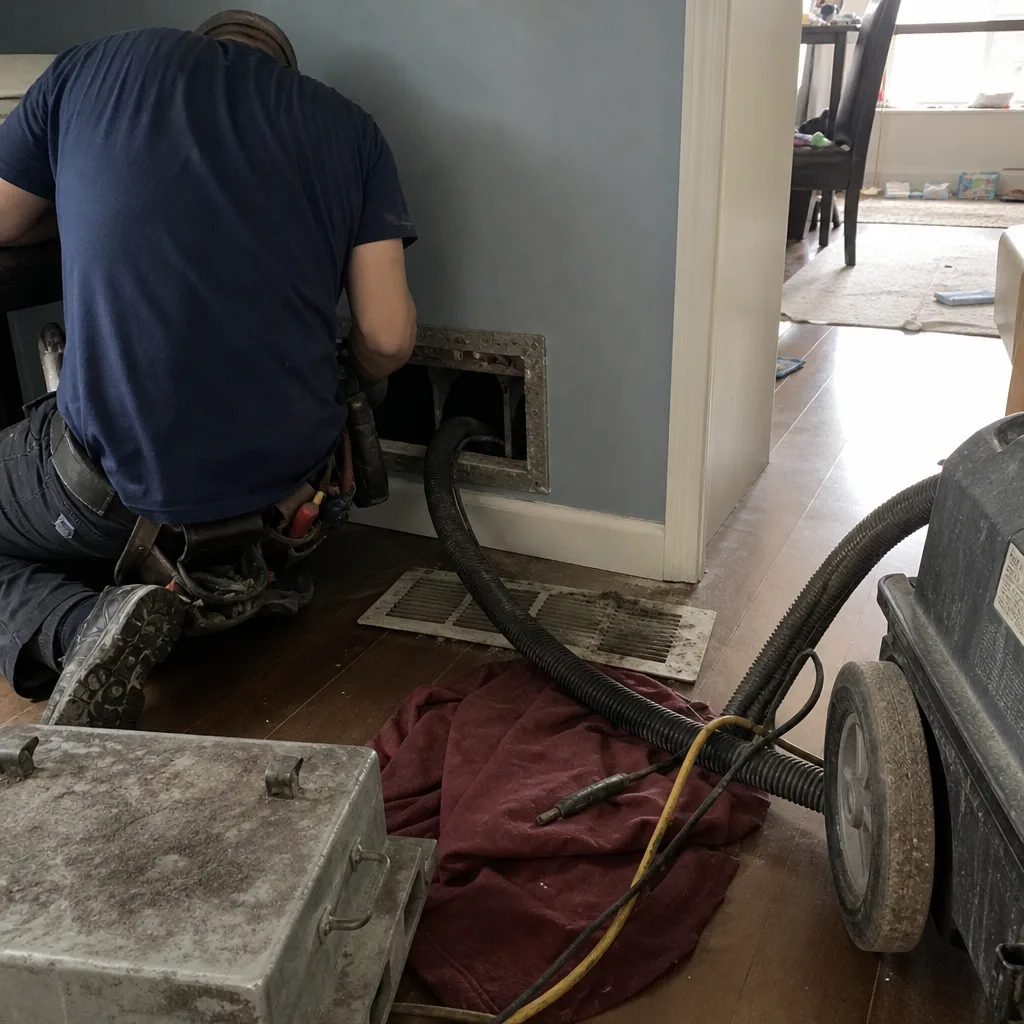 Before
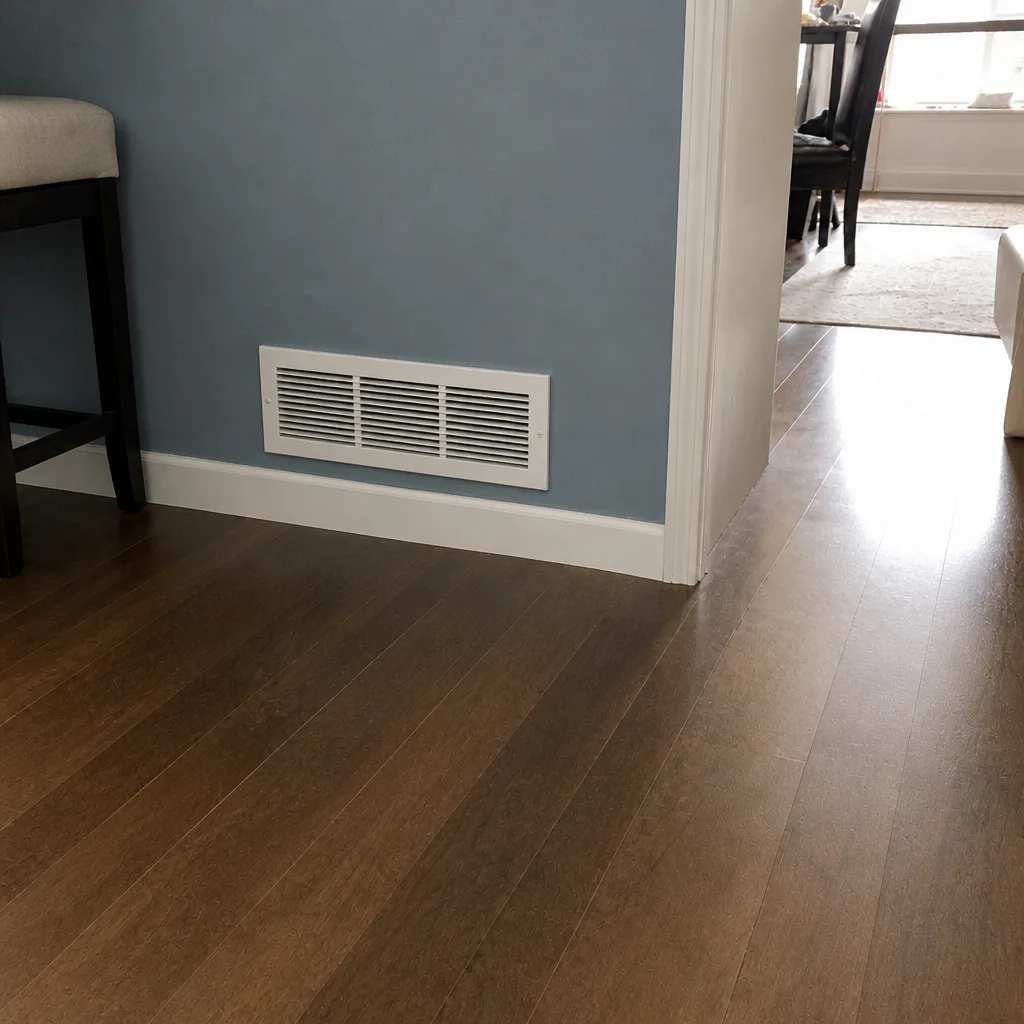 After
Sanitizing, Sealing, and Repair Alongside Cleaning
Cleaning alone only addresses what’s already in the ducts. The durable part of a maintenance plan includes air quality sanitizing, duct sealing, and duct repair, because those reduce how fast the system recontaminates. A cleaning that removes debris but leaves a disconnected branch or an open crawlspace return will need to be redone sooner than the interval suggests.
Sealing close gaps in the duct envelope. Repair fixes disconnected joints, collapsed flex sections, and torn liner. Sanitizing addresses the biological side after a cleaning, particularly after a humidity-heavy summer or a water intrusion event. Doing these together with the cleaning – rather than scheduling separate visits – keeps the whole system on the same schedule and avoids paying for multiple trips. When a Green Hills home has humidity and mold concerns, getting the whole scope handled at once is the more useful call.
We use professional-grade Rotobrush and Nikro equipment, along with Abatement Technologies negative-air containment, so the cleaning process pulls dislodged contaminants out rather than pushing them back through the living space. That containment-first approach matters most when sanitizing and sealing are on the same visit as the cleaning.
Common Mistakes to Avoid
- Treating “every 3 to 5 years” as a fixed plan. That range is a starting floor, not a schedule. Homes with pets, allergies, or recent renovation usually need to go shorter.
- Buying the highest-MERV filter available. A MERV 13 filter in a system designed for MERV 8 can raise static pressure enough to reduce airflow and strain the blower. Match the grade to your system, not the shelf.
- Cleaning on a calendar without ever looking at the registers. The visual inspection takes ten minutes and tells you whether you’re on a 2-year or 5-year cycle in your own home. Skipping it means guessing.
- Cleaning in mid-winter for a spring pollen problem. Timing matters; the two strategic windows for Green Hills are late spring after pollen season and late summer after the humidity peak.
- Hiring a cleaner without containment equipment. A cleaning that agitates dust without HEPA extraction and negative-air containment just relocates the debris into the living space. Ask what equipment will actually be on the job.
- Ignoring the dryer vent while scheduling duct cleaning. Lint buildup in the dryer vent is a fire risk, and many duct cleaners skip or underperform that part of the job. Book it as a dedicated service alongside the main cleaning.
- Skipping sealing and repair to save on the visit. Unsealed leaks and disconnected branches will refoul the system faster than the interval predicts, so the money saved on sealing usually gets spent on sooner cleanings.
When to Call a Professional
Most of the schedule work above is self-directed. A few things aren’t. If you’ve done a register inspection and seen heavy accumulation or a musty odor, if there’s been a renovation, water intrusion, or rodent activity in the past year, if a household member has new allergy or asthma symptoms that seem tied to the home, or if the system is fiberboard or heavily flex, professional cleaning is the right next step rather than another round of waiting. The same applies if you’ve never had the ducts cleaned and don’t know the system’s history – a first inspection and cleaning sets your baseline for everything else. Air Duct Cleaning Green Hills offers free estimates in Green Hills, and we handle dryer vent cleaning on the same visit so the lint hazard gets addressed while we’re already there. Call (855) 658-4338 to schedule.
Frequently Asked Questions
Most homes need cleaning every 2 to 5 years, with the specific interval driven by pets, occupant count, allergy history, renovation activity, and duct material rather than a fixed calendar. A simple register inspection every six months tells you which end of that range your home falls on. If you want a firm answer for your house, call (855) 658-4338 for a free estimate.
No – the EPA guideline is a general floor rather than a prescription, and it assumes a fairly clean household with no pets, no allergies, and no recent renovation. Homes with those factors recontaminate faster and typically need cleaning closer to every 2 to 3 years. We build the interval from the actual load on the system, which is the only number that matters.
Most Green Hills homes do well with MERV 8 to MERV 11, which capture everyday dust and pollen at low airflow resistance. MERV 13 is a real step up in filtration but can raise static pressure enough to reduce airflow on systems not designed for it, so check whether your system tolerates it before upgrading. If you’re unsure, we can advise on a Honeywell or Aprilaire setup sized to your blower.
Late spring after pollen season and late summer after the humidity peak are the two strongest windows. Late spring clears the year’s pollen load before the cooling season kicks into high gear, and late summer removes any biological growth that took hold during the muggiest weeks. If you’re picking one, late spring is the better choice for allergy sufferers.
Yes – renovation dust from drywall, sanding, and cabinet work is fine, heavy, and settles into ducts for years after the project ends. A cleaning within a month or two of the project finishing keeps it from becoming a long-term problem. Call (855) 658-4338 to book a post-renovation cleaning.
Not on every cleaning, but after a humidity-heavy summer, a water intrusion event, or a mold concern, sanitizing makes sense alongside the cleaning. It addresses the biological side of the system rather than just removing debris. We handle it as part of the same visit so you’re not scheduling multiple trips; call for a free estimate.
The Bottom Line
The “3 to 5 years” number is a floor, not a plan. The right maintenance schedule for your Green Hills home comes from your load factors – pets, occupants, allergies, renovation history, and duct material – combined with a simple register inspection every six months. Match the filter grade to your system instead of buying the highest MERV on the shelf, aim for late spring and late summer as cleaning windows, and let renovation dust, rodent evidence, water intrusion, and a new pet jump the queue when they happen. A HVAC cleaning scheduled with the ducts, sealing, and repair handled in one visit is the whole-system approach that keeps the interval honest. If you’d rather have someone walk the system and give you a straight answer, our team is here – see the full range of what we do at Air Duct Cleaning Green Hills.
Call (855) 658-4338 for a free estimate. We answer 24/7. Fast dispatch from 7am to 7pm, Sunday through Friday. Our technicians have up to 12 years of experience, and we bring professional-grade equipment and containment-first process to every job.
Written by the team at Air Duct Cleaning Green Hills.